8.3
As with my most recent post, I feel the need to begin with an explanation of how my relationship with the artist whose album I'm reviewing might affect my opinion of said album. In this case, the artist is not only another former Malone student, but also a personal friend. In fact, it is doubtful that I would have ever heard this album without knowing John, or at least going to school or living in Canton with him. But, that doesn't mean that I'm giving him or his music any sort of free pass or local artist handicap. Like many twenty-something-year-olds, I know a fair amount of people who play music alone or as part of a band, and I will readily admit that I don't regularly listen to a majority of their music. I will also say that I do listen to John's music, both as solo artist and part of A Minor Bird, and with good reason.
If The Warmer Winds has one great weakness, it is the album's somewhat lopsided nature. Five out of the album's first seven tracks all have the sort of songwriting brilliance that makes John King stand out as a big fish in a small pond. "The Woods" seems to have stood out to John himself, since it's the only song (to my knowledge) to have an accompanying video. The song is a gorgeous, mostly acoustic ballad that strikes a wonderful balance between ethereal and folksy. That same sort of haunting beauty filters in and out of the entire album, usually presenting itself most clearly when the lyrics are the most vulnerable, open, and honest. A perfect example of this comes at the end of "Badlands," when John sings of the "two wandering boys with tattoos on their darker skin," and how they were "sent away in the name of our protection." In moments like that, the synchronization of music and lyrics is so dead on it's hard to believe that this is a debut album from an artist of such little acclaim. That shock might be even greater on "500 Nights Alone," which I consider to be an absolutely timeless folk-rock gem. One of the fullest sounding tracks of the album, "500 Nights" showcases John's skill with an electric guitar, as well as his ability to transition from a delicate falsetto to a near yell without jolting the listener so much as pleasantly surprising him or her. On top of those delicious guitar licks and versatile vocals are added the extra vocals of Anya Antonavich (I could be wrong on that, but it certainly sounds like her distinct and talented pipes), which add an extra dimension to the song, both musically and emotionally. John also gets help from others on "Tomorrow's Song," a creative piece that combines some of the album's most ambient sounds with its most raucous, moving from one voice over droning background music to a collective shout accompanied by clapping hands, tambourines, and general chaos, and then back again. If I remember correctly from a show John played at, the track is based loosely on a dream he had, and the songs opening and closing do a great job at letting the listener in on that.
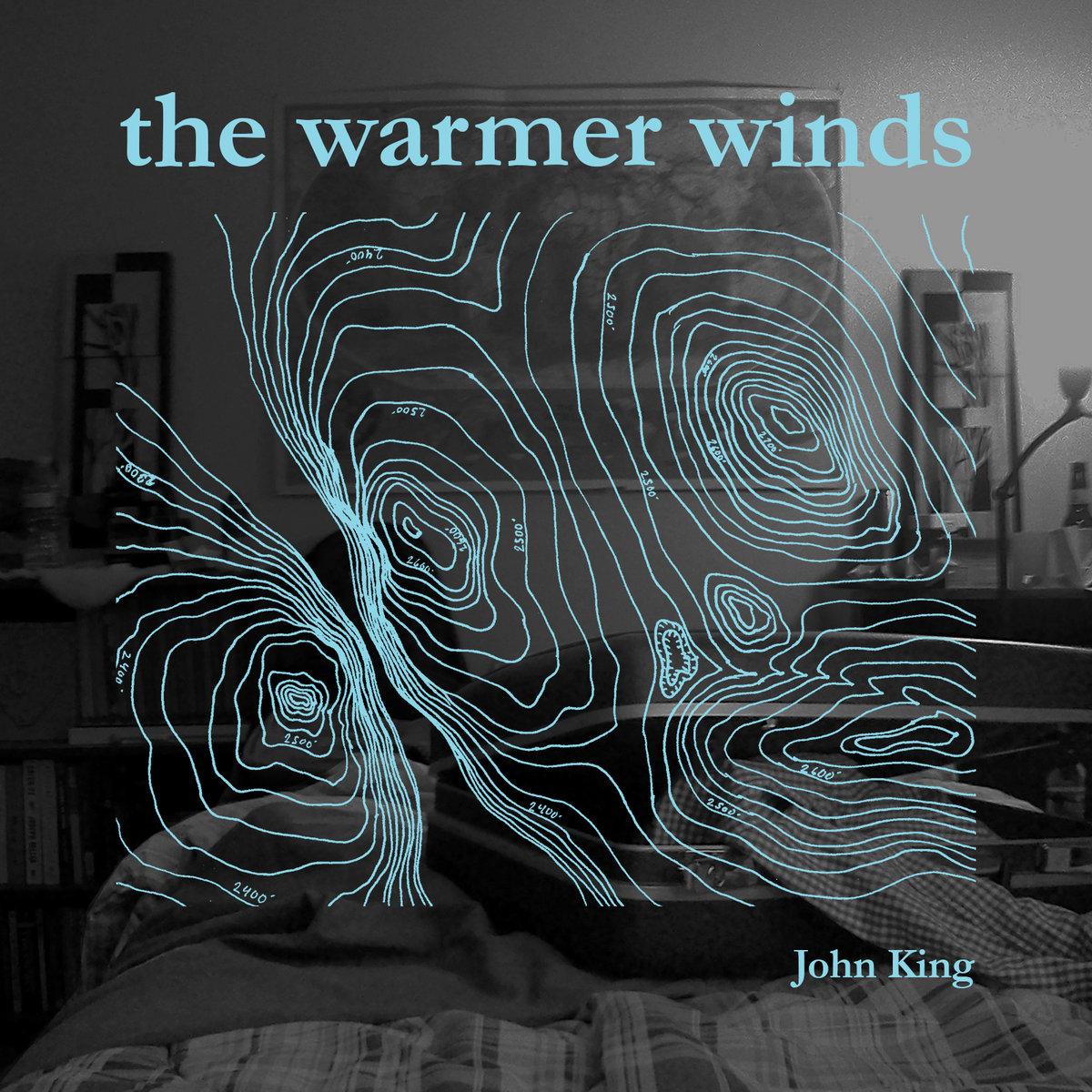
As I mentioned, the weakness of the album seems to lie in it's unevenness. After many listens, I can't help but split the album into two distinct halves, the first ending with "500 Nights Alone," and the second beginning at "Phono Mind." After a few listens, I would have said that the first half is about a 9/10 and the second a mere 5 or 6, but at this point I think I've realized that both are much more equally powerful than they let onto at first. It should be clear from my last paragraph that the songs on side A are quite good, and most do well standing on their own. In fact, if one had to choose one of them to play as a radio single, the decision would be a close call between most of them. The same cannot be said of side B, which contains the album's three longest tracks, which all surpass the 6-minute mark, just a bit beyond typical single-length. But, these longer, almost rambling tracks create a cohesive when listened to together. Part of this comes from the two transitional pieces that round out the half-album set, but it is also from their overall feel and sound. As indicated by both the suitcase and the topographic map on the album's cover, The Warmer Winds is definitely a travelogue of sorts (just take a look at some of the song titles), and the sound created on side B reflects that. John doesn't quite create the open road sound of a Springsteen or the Doobie Brothers, but there's a certain quality of his music that gives one the feel of heading into the unknown. The same way that highway miles tend to be forgotten on a long drive, the minutes tend to fade away as The Warmer Winds rolls on. The best analogy I can come up with is that the second half of the album is kind of like "fly-over" states: easy to forget the names and order of if you've never lived in one of them, but mysteriously vast and beautiful once you take the time to really squint your eyes and look closely. When you pair both sides of the album together, there's plenty to explore, regardless of whether you'd prefer to scope out the big attractions or see the sights off the beaten path.

No comments:
Post a Comment